
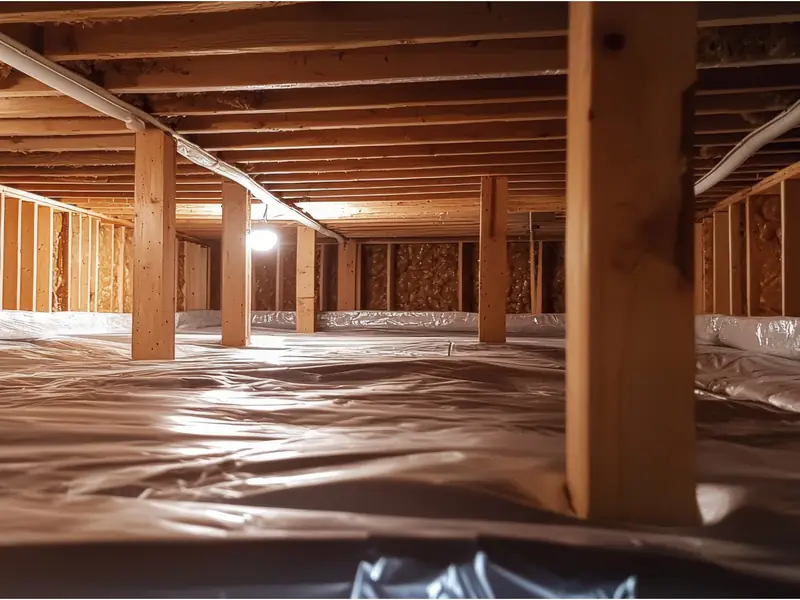
How a vapor barrier works
Moisture moves toward cooler surfaces. When warm indoor air meets a cold wall or floor, water can condense inside the cavity and soak the insulation. A barrier limits how much vapor gets through.
Crawl spaces over damp ground are the most common place we install them. Walls and floors where temperatures swing can need one too.
How we install it
We look at how your home handles moisture before deciding where the barrier goes. That means the layout, insulation, soil, and how air moves through the space.
In crawl spaces, careful placement and sealed seams matter. A barrier in the wrong spot can trap moisture instead of stopping it.
Common questions
When is a vapor barrier worth it?
When moisture keeps showing up where it should not, like ground dampness in a crawl space or humid air settling inside walls. A barrier helps keep those materials dry.
How do you decide where the barrier goes?
We look at the layout, insulation, soil, and airflow. If the problem is damp ground, it goes over the soil in the crawl space. If it is warm air hitting cold surfaces, it may belong on the warm side of the wall.
Will a vapor barrier make the house more comfortable?
It can. Steadier humidity inside walls and crawl spaces helps flooring and insulation perform better. It works best as part of a full moisture plan, not on its own.