
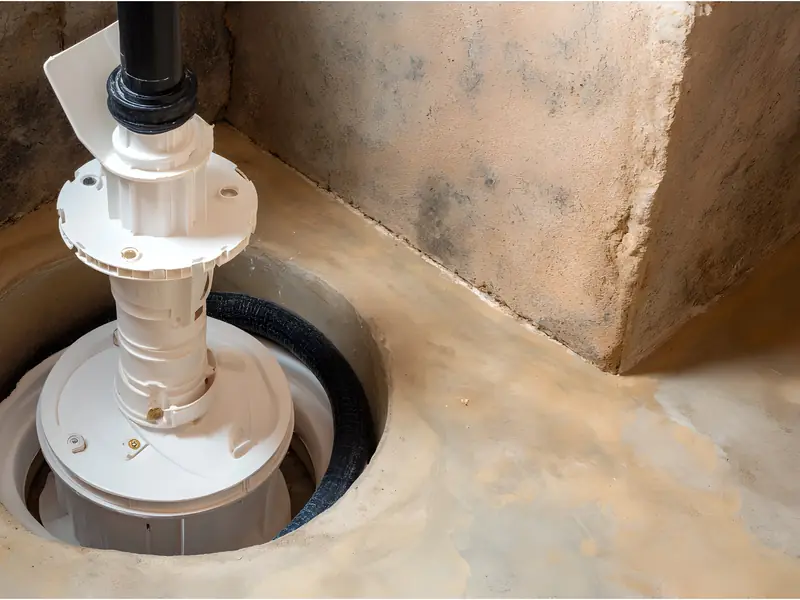
How a sump system works
Water that seeps in through walls or up from the soil is directed into a pit. When the water rises, the pump turns on and sends it out of the house.
Sump pumps are often paired with drainage channels along the inside of the foundation, so water has a path to the pit instead of spreading across the floor.
When a sump pump makes sense
If your basement or crawl space takes on water after heavy rain, if the soil around the house stays wet, or if you have flooded before, a sump system is usually part of the answer.
We look at where the water is coming from first. Sometimes a pump alone does the job. Sometimes it works best with waterproofing, grading changes, or a vapor barrier.
After a flood
If you are dealing with water right now, we handle the extraction and drying first, then talk about how to keep it from happening again. Sump pump maintenance is part of that conversation.
Common questions
Do I need a sump pump or waterproofing?
It depends on how water is getting in. Many homes do best with both: drainage or sealing to control where water goes, and a sump pump to get it out.
Can you install a sump pump after a basement flood?
Yes. We take care of the water removal and drying first, then install the pump as part of preventing the next flood.