
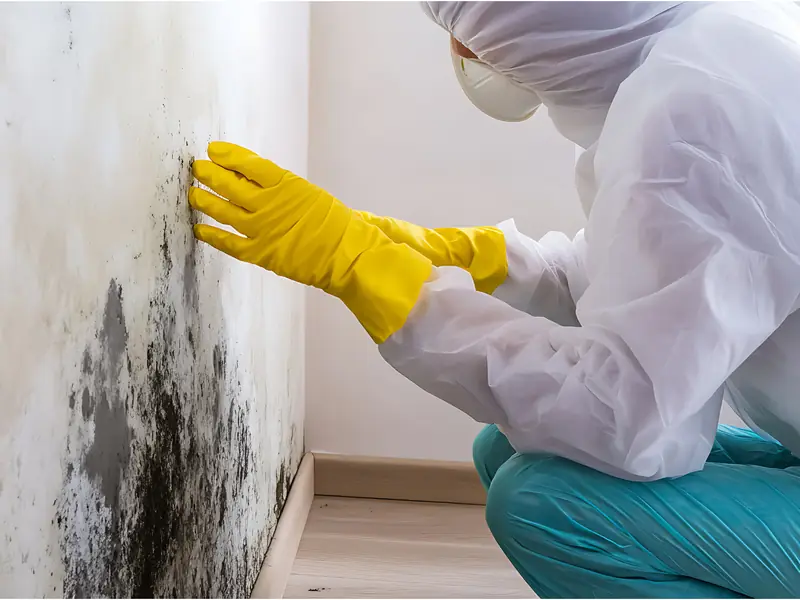
Finding the moisture source
Mold keeps coming back if the water does not stop. We track down where the dampness starts, like a plumbing leak, poor ventilation, or water getting in from outside, and plan the repair.
We also look for staining, soft materials, and condensation in each room. Those show how long the problem has been there and how far it went.
Containment and removal
Spores travel on air currents, so we set up containment before we disturb anything. Then we remove growth from materials that can be saved and take out materials that are too far gone.
When the work is finished, we inspect again to confirm the surfaces are clean and the moisture source is handled.
Keeping it from coming back
Humidity control, working ventilation, and fast attention to leaks make the biggest difference. Daily things like cooking, showers, and drying clothes indoors add moisture too, and we will point out where that matters in your house.
Common questions
What causes mold indoors?
Moisture that sits in places without good airflow. Leaks behind walls, everyday humidity, and small plumbing problems give spores what they need. Once drywall or flooring stays wet, growth speeds up.
How long does mold removal take?
It depends on the size of the area, how deep the growth goes, and how much moisture work is needed. Small jobs can be quick. Larger ones need more time for containment, removal, and drying. The inspection gives us a realistic timeline.
Can mold come back after removal?
It can if the conditions that caused it are still there. That is why we fix the moisture source, not just the visible mold.